Table of Contents
A weeping hydraulic quick coupling is never just cosmetic. Leakage means contamination getting in, fluid getting out, pressure bleeding off, and a machine that loses performance one drop at a time. Left alone, a small weep becomes a stream, a stream becomes a failure, and the coupling seizes or lets go at the worst moment.
This guide covers the five causes behind most leaking quick disconnects, how to tell them apart without a test bench, and the fix for each — including when the fix is a seal kit, when it is a matching problem, and when it is a safety issue you should not touch.
⚠️ Never inspect a suspected high-pressure leak with bare hands or a rag. Hydraulic fluid injection injuries are medical emergencies. Depressurize the circuit completely before touching any coupling.
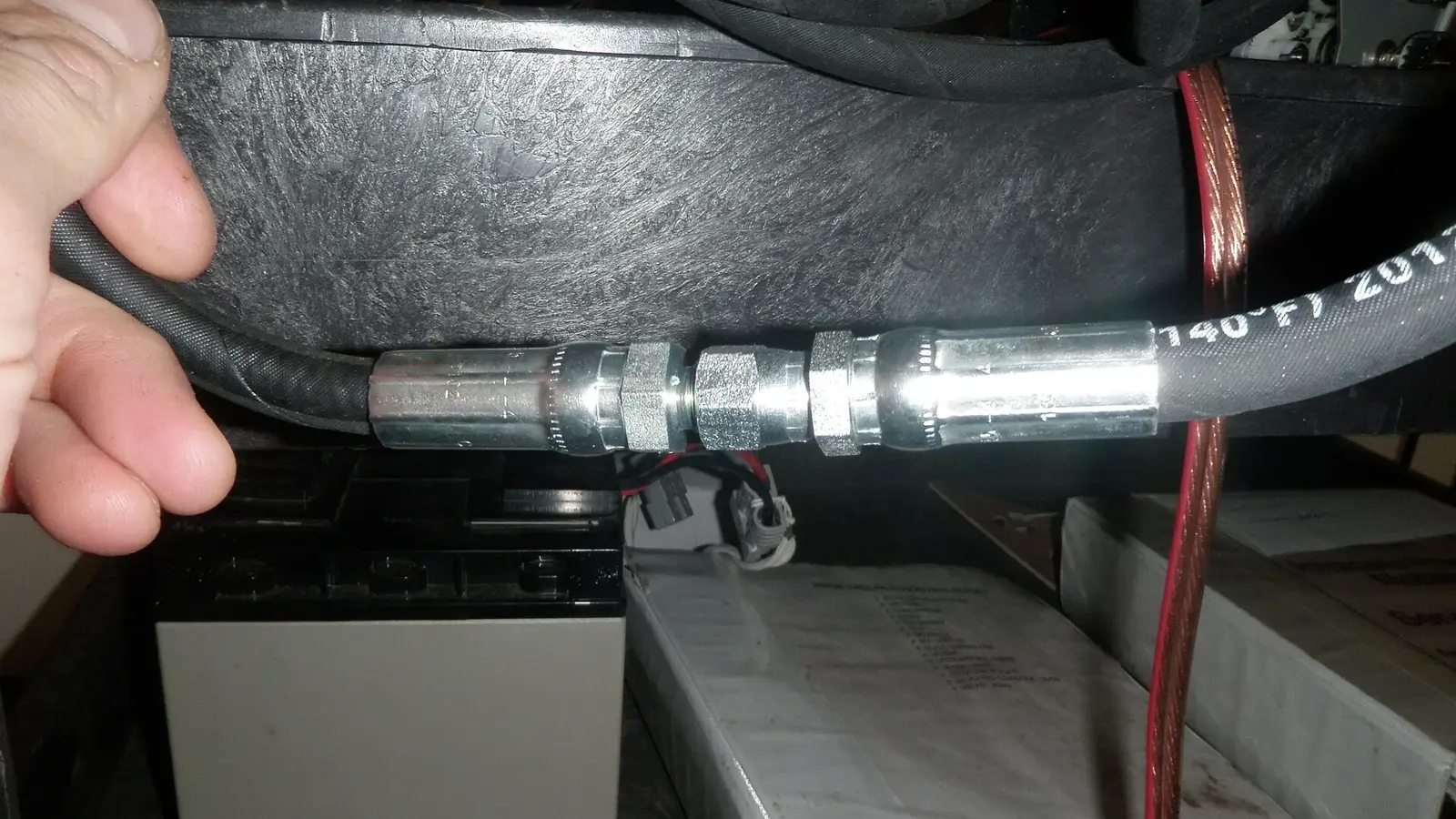
The Top 5 Causes of a Leaking Quick Disconnect
| # | Cause | How it looks | How often |
|---|---|---|---|
| 1 | Worn or damaged O-rings/seals | Weeps around the sleeve or seal face; connects fine | Very common |
| 2 | Contamination on the valve seat | Drips after connection; dirt visible on face | Most common overall |
| 3 | Incomplete engagement (plug not fully locked) | Leaks only at pressure; sleeve not fully home | Common |
| 4 | Wrong mating pair (A vs B, wrong size) | Does not seal or locks poorly; new part recently installed | Common on replacements |
| 5 | Damaged valve face or locking groove | Leaks constantly; plug feels loose or grinds | Less common, usually abuse |
Cause 1 — Worn O-Rings and Seals
Symptom: leaks around the seal area, often worse when the coupling is flexed or at temperature. The coupling connects and disconnects normally.
Why: O-rings and seal faces are consumables. Heat, fluid compatibility issues, and repeated cycles harden or flatten the seal. The coupling itself may have years of life left.
Fix: Replace the seals. Most quick couplings have a seal kit; record the coupling’s series and size (see our identification guide) and order the kit. Clean the seal grooves before fitting, lubricate the new seals with compatible fluid, and cycle the coupling a few times before returning it to service.
Cause 2 — Contamination on the Valve Seat
Symptom: leaks at the connection point immediately after connecting; visible dirt, grit, or film on the valve face when you separate the halves.
Why: Dirt is the #1 killer of hydraulic quick couplings. The valve seats are precision surfaces; a single grain of sand on a poppet or flat face holds the valve open.
Fix: Wipe both faces before every connection. For flat-face (ISO 16028) couplings, the flush design exists precisely so faces can be wiped clean — use that advantage. For contaminated systems, fit dust caps on every disconnected half (cap the hose end and the machine end). If the system is chronically dirty, check the filtration before blaming the coupling.
Cause 3 — Incomplete Engagement
Symptom: leaks only under pressure; the sleeve does not sit fully back against the socket body; a hard push “fixes” it temporarily.
Why: The plug is not fully seated, so the valves do not open fully and the seal lands on the wrong part of the socket. Causes: connecting under residual pressure, a stiff sleeve, or a plug with a slightly wrong groove position.
Fix: Depressurize, push the sleeve fully, seat the plug with a positive click, and confirm the sleeve returns to the locked position. If the sleeve is stiff, clean and lubricate the sleeve area. If it still will not seat, measure the groove position against the drawing — you may have a near-match plug, not an interchangeable one.
Cause 4 — Wrong Mating Pair
Symptom: a newly installed coupling leaks or does not seal; the parts look right but behave wrong.
Why: ISO 7241-1 Series A and Series B have different profiles. A 1/2” Series A plug can enter a 1/2” Series B socket far enough to look connected, but the valves and seals never align properly. Flat-face and agricultural parts have the same trap.
Fix: Verify the interface family on both halves — never mix Series A with Series B. Confirm nominal size within the family and the pressure class. When in doubt, measure the plug profile (see our identification guide) and confirm against drawings.
Cause 5 — Damaged Valve Face or Locking Groove
Symptom: leaks constantly even when new seals are fitted; the plug feels loose, grinds, or the sleeve will not lock.
Why: Connecting under pressure, forcing a wrong-profile plug, or dropping the coupling damages the valve face and the locking groove. These are precision surfaces; scratches and burrs cannot be lapped out in the field.
Fix: Replace the damaged half (or the pair). A damaged valve face will destroy new seals within hours. Check the mating half for damage too — a burred plug chews up a new socket.
The 5-Step Repair Sequence
- Depressurize and isolate the circuit per the machine’s stored-energy procedure. Confirm with a gauge, not a feeling.
- Clean both halves, wipe the valve faces, and inspect with good light.
- Identify the series and size (measurements + markings) before ordering anything.
- Repair or replace — seals for cause 1, caps and cleaning for cause 2, re-seat for cause 3, matched pair for cause 4, damaged half for cause 5.
- Cycle and re-test under pressure. A fixed coupling should connect with one hand and hold pressure with zero weep.
FAQ
My coupling leaks only when connected — why not when disconnected? A disconnect that holds pressure but leaks when connected points to the mating pair (cause 4) or valve timing (cause 3), not the disconnect seals. The valves are opening against the wrong geometry.
Can I fix a leaking quick coupling with thread sealant? No. Thread sealant belongs on threaded connections, not on quick-coupling seals. It will contaminate the system and make the leak worse.
How often should I replace quick-coupling seals? There is no fixed interval — it depends on cycles, fluid, temperature, and contamination. Inspect at every service; replace when the seal shows flattening, cracks, or the coupling starts to weep. Many fleets keep a seal kit on the truck for the most common size.
Why does my flat-face coupling leak after being left disconnected? Almost always contamination or a damaged face. Flat-face couplings rely on clean, undamaged faces; cap the halves when disconnected.
Need help with a leaking coupling?
Send us a photo of both halves, the markings (or measurements), and the machine and circuit details. We’ll help identify the family and the right seal kit or replacement pair.
Related guides: How to Identify Hydraulic Quick Couplings: A Field Guide | ISO 7241 vs ISO 16028 vs ISO 5675: Interchange & Selection Guide
NEXT STEP
Need the Right Hydraulic Quick Coupling for Your Machine?
Tell us the standard, size, thread and quantity — we respond within 24 hours with pricing and lead time.
Written by
Ray ChanHydraulic quick coupling sourcing specialist. Ray helps distributors, OEMs and maintenance teams find the right ISO 7241 / ISO 16028 / ISO 5675 couplings and replacement parts.